
Emergency Preparedness & Response
In Kentucky, we encounter various natural disasters and man-made challenges throughout the year, ranging from tornadoes and floods to winter storms and hazardous chemical spills. These events can happen unexpectedly, so it’s crucial for every household and business to be ready to face them head-on.
While state and local governments are available to assist during emergencies, the first line of defense begins at home. Awareness is key to preparedness, starting with understanding the potential risks in your community and staying informed about weather forecasts. Having a battery backup NOAA Weather Alert Radio and local broadcasting stations can help keep you updated during emergencies, while discussing conditions with family members ensures everyone’s safety.
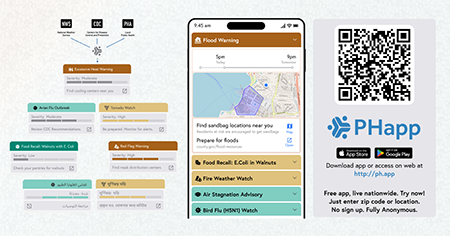
Stay Informed. Stay Safe. Download PHapp.
PHapp is a free public health preparedness app that delivers accurate, up-to-date health and safety information from trusted sources like the CDC, NWS, USDA, FDA, FEMA, and your local public health agencies.
Just enter your ZIP code or location to get started.
Why PHapp?
One-stop access to verified health and safety updates
Trusted information translated by experts into 50+ languages
Interactive content with maps, images, and AI-powered videos
Custom alerts based on your topics and notification preferences
All-hazards readiness, tailored to your area
Seamless experience across all U.S. jurisdictions
Privacy-first: no sign-up, no emails, no phone numbers, no tracking
Get the clarity and peace of mind you need—right when it matters most.
Try PHapp today.
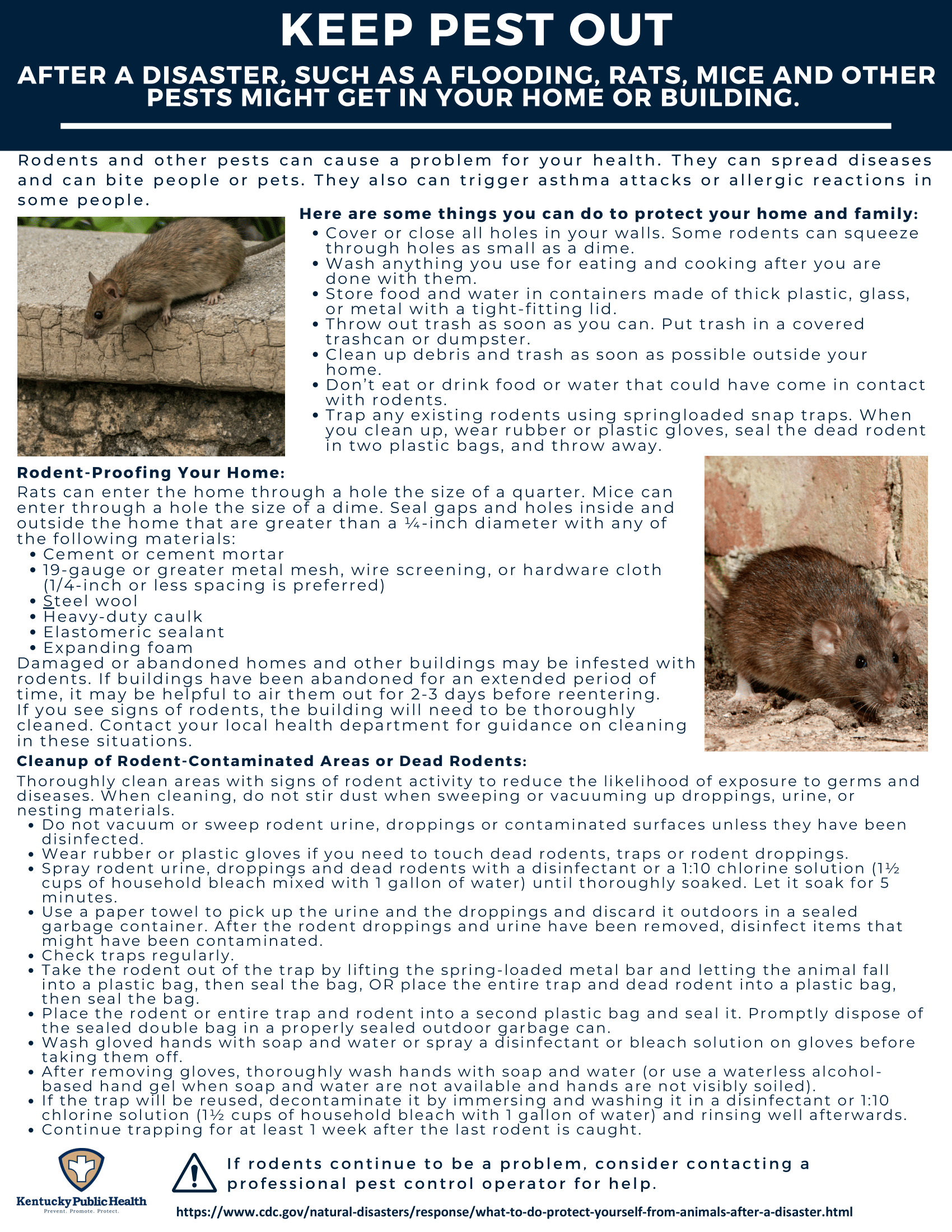
Keep Pests Out – Prevention & Cleanup Guide
This guide provides essential tips for keeping pests like rats and mice out of your home, especially after disasters such as flooding. Learn how to seal entry points, safely clean up rodent-contaminated areas, and prevent health risks associated with pests. Includes recommendations for rodent-proofing materials and proper disposal methods.
- Prevent pests after disasters – Flooding can bring rodents into homes.
- Seal entry points – Use materials like steel wool, heavy-duty caulk, or metal mesh.
- Store food safely – Use thick plastic, glass, or metal containers with tight lids.
- Dispose of trash properly – Use covered trash cans and clean up debris quickly.
- Safe cleanup tips – Disinfect rodent droppings before removal and wear gloves.
- Trap existing rodents – Use spring-loaded traps and dispose of rodents safely.
- Protect your health – Rodents can spread diseases and trigger asthma/allergies.
- Seek professional help – If the problem continues, contact pest control.
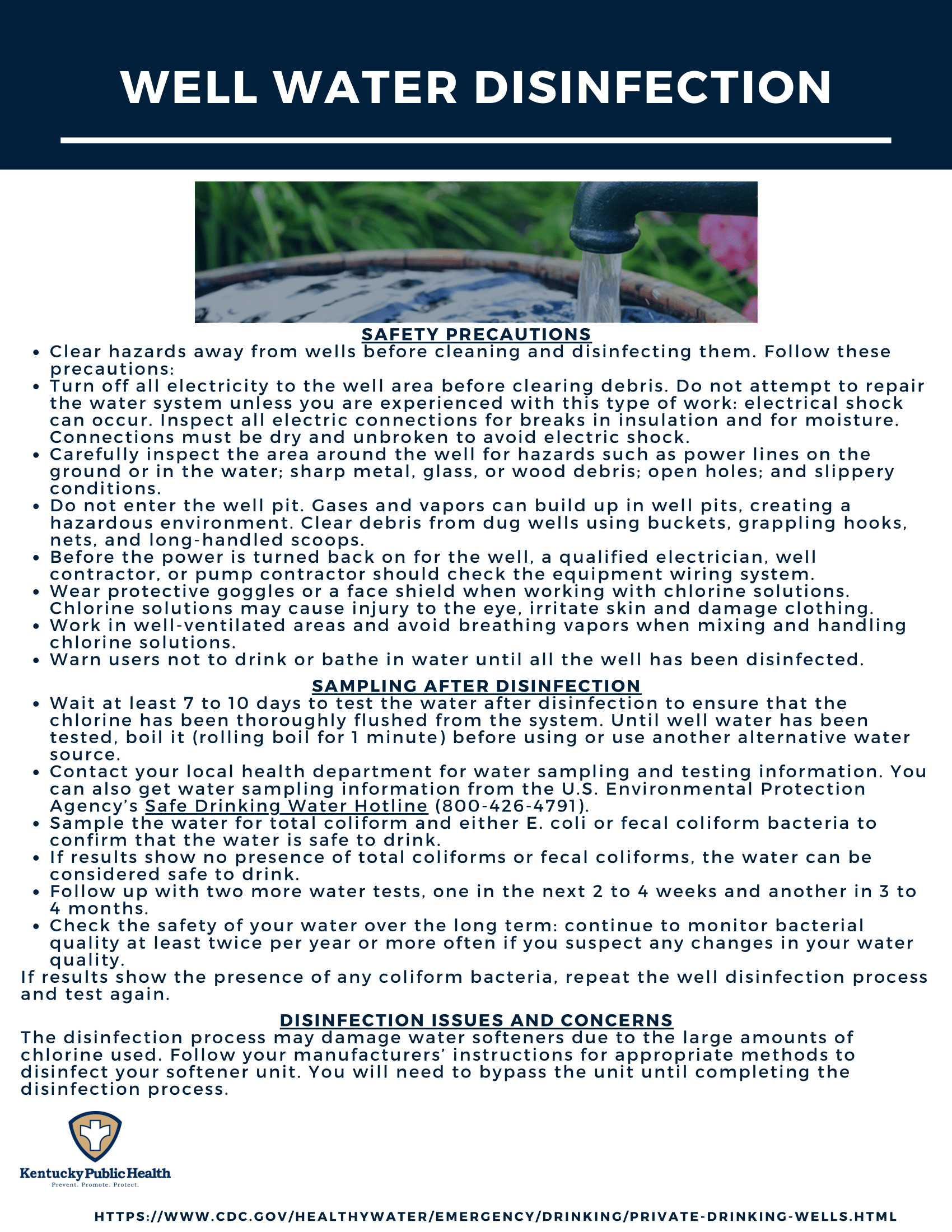
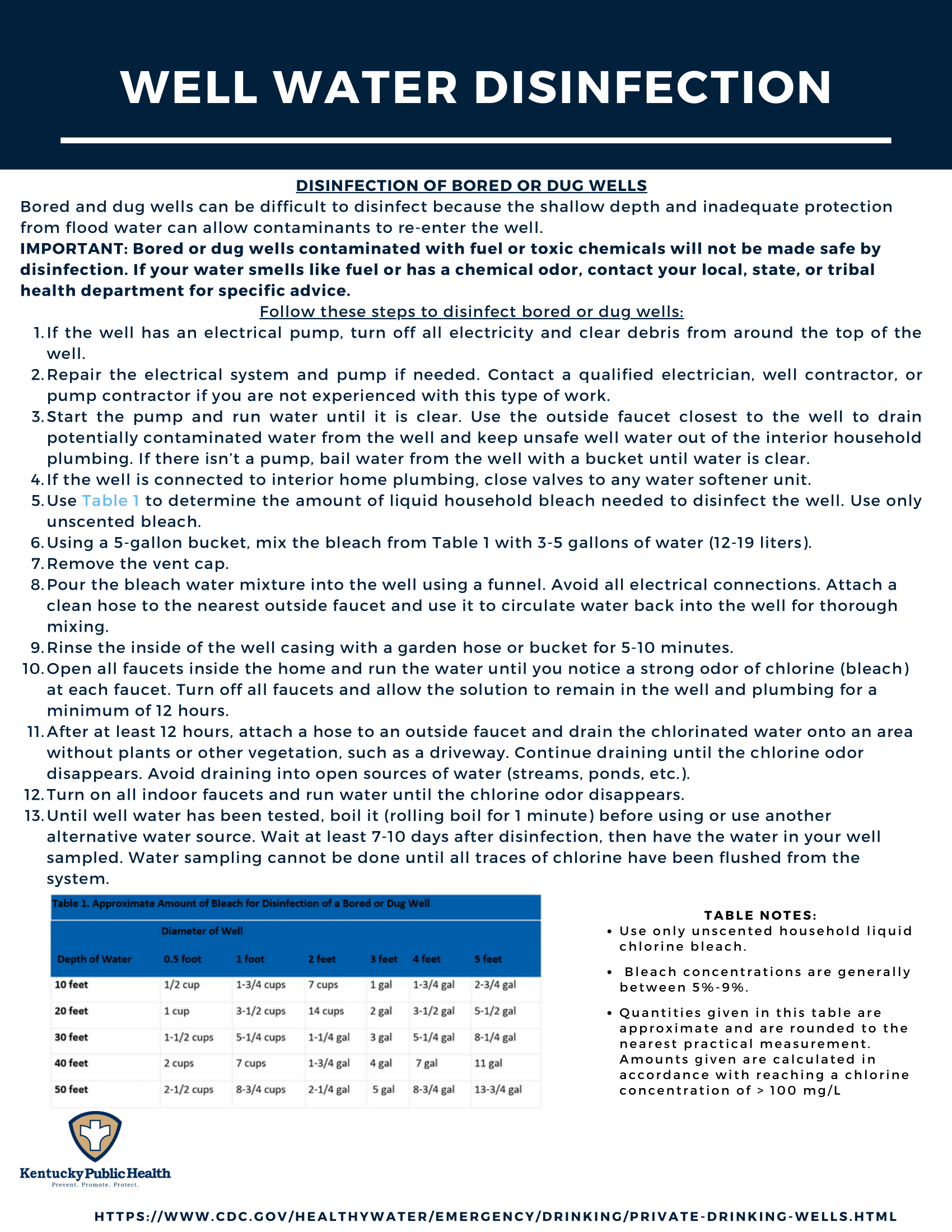
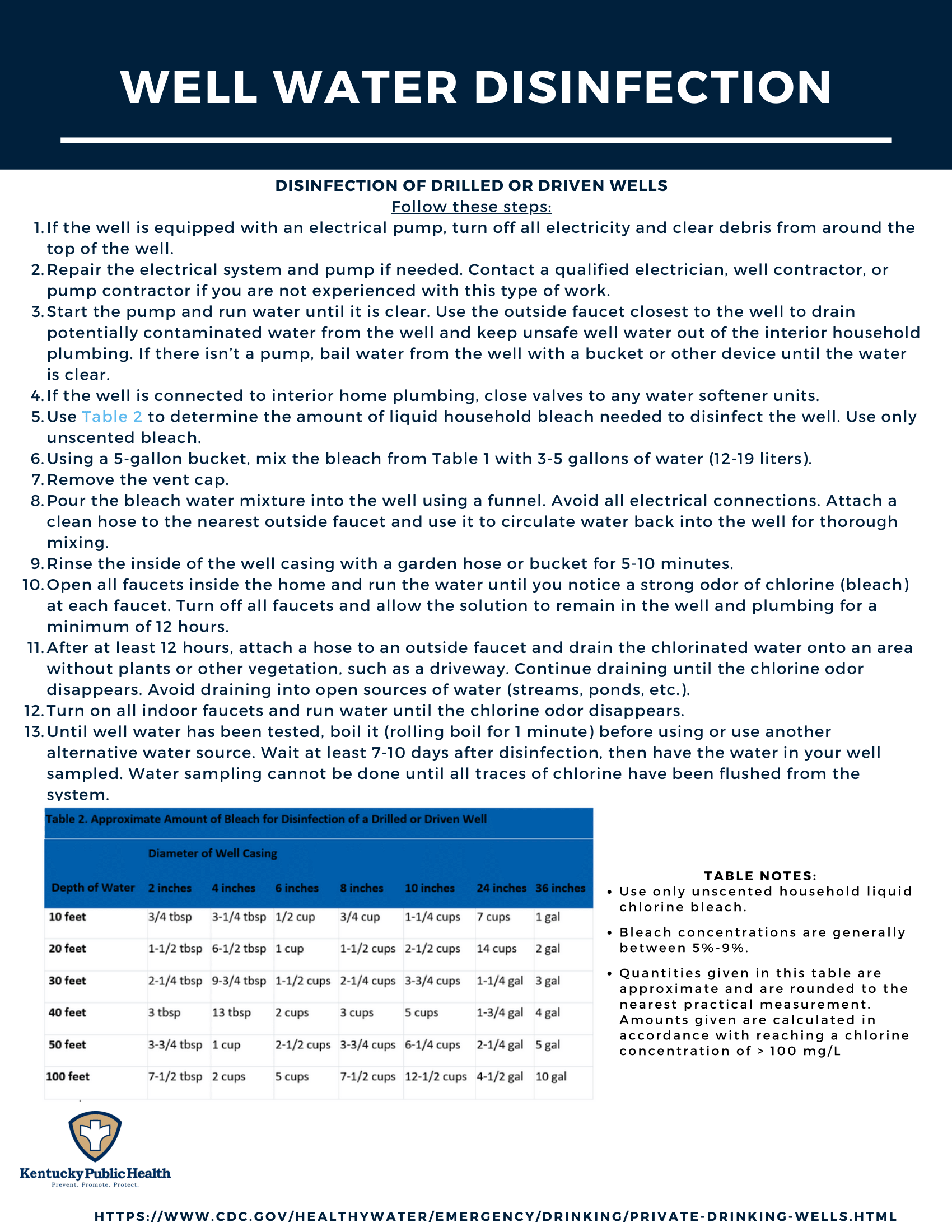
Well Water Disinfection After Flooding
- Do Not Use Contaminated Water – Avoid drinking, cooking, or bathing with well water until it has been tested and disinfected.
- Inspect the Well – Check for damage, debris, or sediment before disinfection.
- Pump Out Contaminated Water – Remove as much floodwater as possible before treatment.
- Disinfect with Bleach –
- Mix unscented household bleach with water (about 1 gallon of bleach per 1000 gallons of well water).
- Pour bleach into the well and circulate the water by running each faucet until you smell chlorine.
- Let the system sit for at least 8-12 hours without use.
- Flush the System – Run water until the chlorine smell is gone.
- Test the Water – Before using, have the water tested for bacteria and contaminants by a health department or lab.
Use Bottled or Boiled Water – Until test results confirm safety, use bottled or boil water for at least 1 minute before drinking.
Learn More: Well Water Disinfection Precautions 1 2 3
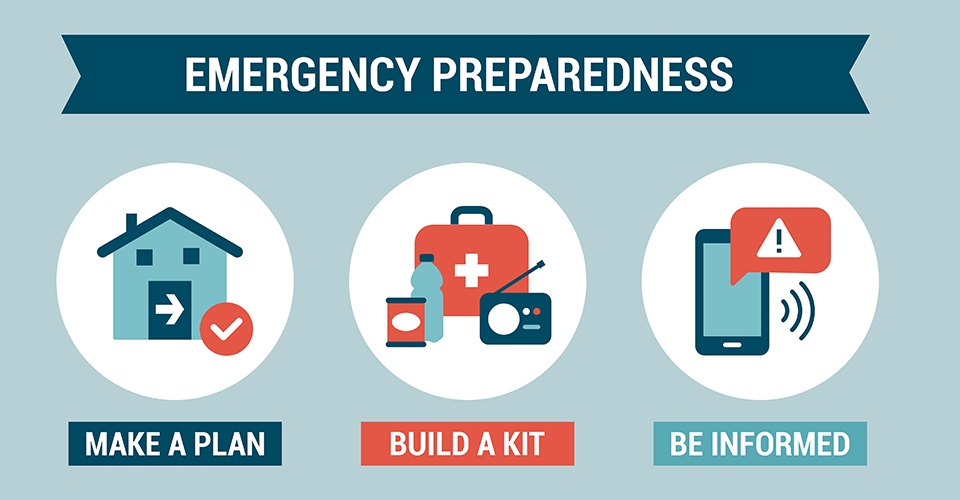
Emergency Preparedness: Have a plan, be prepared for any emergency.
Be Aware:
- Know community risks
- Monitor weather forecasts
- Own a battery backup NOAA Weather Alert Radio
- Stay tuned to local broadcasting stations during emergencies
- Discuss conditions with family members
Be Prepared:
- Maintain a three-day supply of food and water for each family member
- Assemble an emergency kit with essentials like medicines, flashlights, radio, and more
- Refresh emergency kits periodically
- Familiarize yourself with generator safety manuals if applicable
Have a Plan:
- Develop an emergency plan, discussing it with family, neighbors, and an out-of-state contact
- Periodically review and update the plan
- Conduct drills and practice the plan with household members
Kentucky Medical Reserve Corps (MRC)
The Medical Reserve Corps (MRC) is a national program engaging local health and medical volunteers to strengthen public health, emergency response, and community resilience. In Kentucky, the MRC comprises both medical professionals and non-medical volunteers, contributing their time and expertise during emergencies and community needs. Interested individuals can register at www.kentuckyhelps.com to serve their community as MRC volunteers.
- Kentucky Medical Reserve Corps Brochure: CLICK HERE
- KHELPS Volunteer Registration: CLICK HERE
Flood Damage Prevention Ordinance
On May 18, 2006, the Whitley County Fiscal Court adopted a Flood Damage Prevention Ordinance, which requires a Stream Construction Permit from the Kentucky Division of Water (KYDOW) and a Local Floodplain Permit from Whitley County before any development activities start in a designated floodplain. Copies of the flood maps can be obtained from the Kentucky Flood Hazard Portal.
Kentucky Revised Statutes, KRS 151, requires a “Stream Construction Permit” from the KYDOW’s Floodplain Management Section for any kind of development along or across a stream, including those streams not mapped on the community’s flood maps or Flood Insurance Rate Maps (FIRMs). Development means “any man-made change to improved or unimproved real estate”. This includes, but is not limited to: construction of new structures, modifications or improvements to existing structures, placement of manufactured homes, excavation, filling, paving, drilling, driving of piling, mining, dredging, land clearing, grading, construction of bridges, culverts, or any type of work in or along the stream or its bank. Without a Local Floodplain Permit that conforms to the Local Flood Damage Prevention Ordinance, the State’s permit is not valid. In addition to the State and Local permits, an Elevation Certificate may also be required for some structures.
Any person who violates the Flood Damage Prevention ordinance or fails to comply with any of its requirements shall, upon conviction thereof, be fined no less than $100 or imprisoned for not more than 5 days or both, and in addition, shall pay all costs and expenses involved in the case. Each day such violation continues, shall be considered a separate offense.
For more information, please visit the Kentucky Flood Hazard Portal or contact the Whitley County Floodplain Administrator.