
Controlling the Spread of Infectious Diseases
At the Whitley County Health Department, your well-being and the health of our community are our top priorities. One of the critical ways we do this is by diligently working to control the spread of infectious diseases. Here’s a glimpse into how we achieve this mission:
Monitoring Reportable Conditions
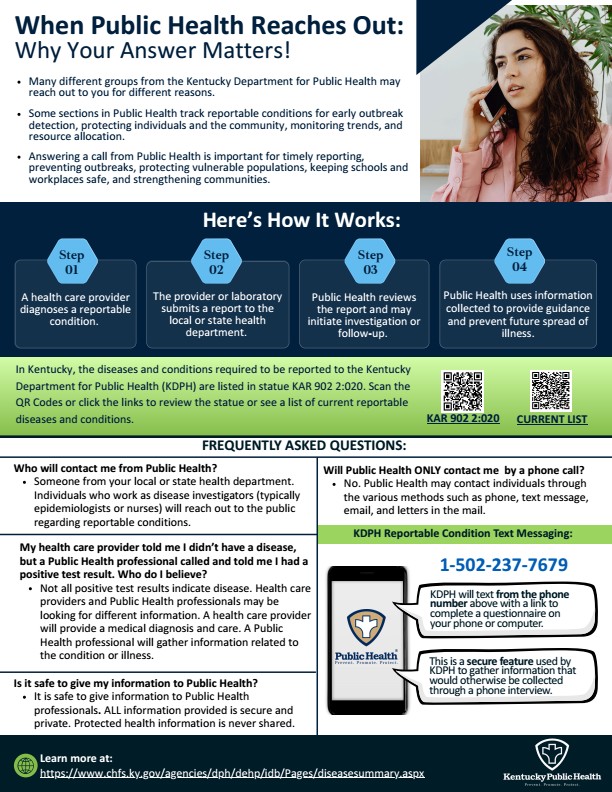
In our ongoing commitment to your health, we keep a watchful eye on reportable conditions within our community. These are illnesses that, by law, must be reported to health authorities due to their potential to spread rapidly. This vigilant monitoring ensures we’re always prepared to take action when needed.
Education and Technical Assistance
Preventing the spread of infectious diseases begins with knowledge. We provide education and technical assistance to individuals, families, and the community as a whole. Our goal is to empower you with information on how to protect yourself and others from illness. This education spans from personal hygiene practices to understanding the importance of vaccination.
Support for Various Conditions
The approach to tackling infectious diseases is not one-size-fits-all. Depending on the specific condition, we offer a range of services, including:
- Testing: To determine if you’ve been exposed to a contagious illness.
- Education: Providing you with the knowledge needed to safeguard your health.
- Vaccination: Offering preventive vaccines to bolster immunity.
- Treatment: Ensuring you receive the right care if you’re already affected.
- Follow-Up Care: Monitoring your progress and health even after treatment.
Pertussis (Whooping Cough) Information
What is Pertussis?
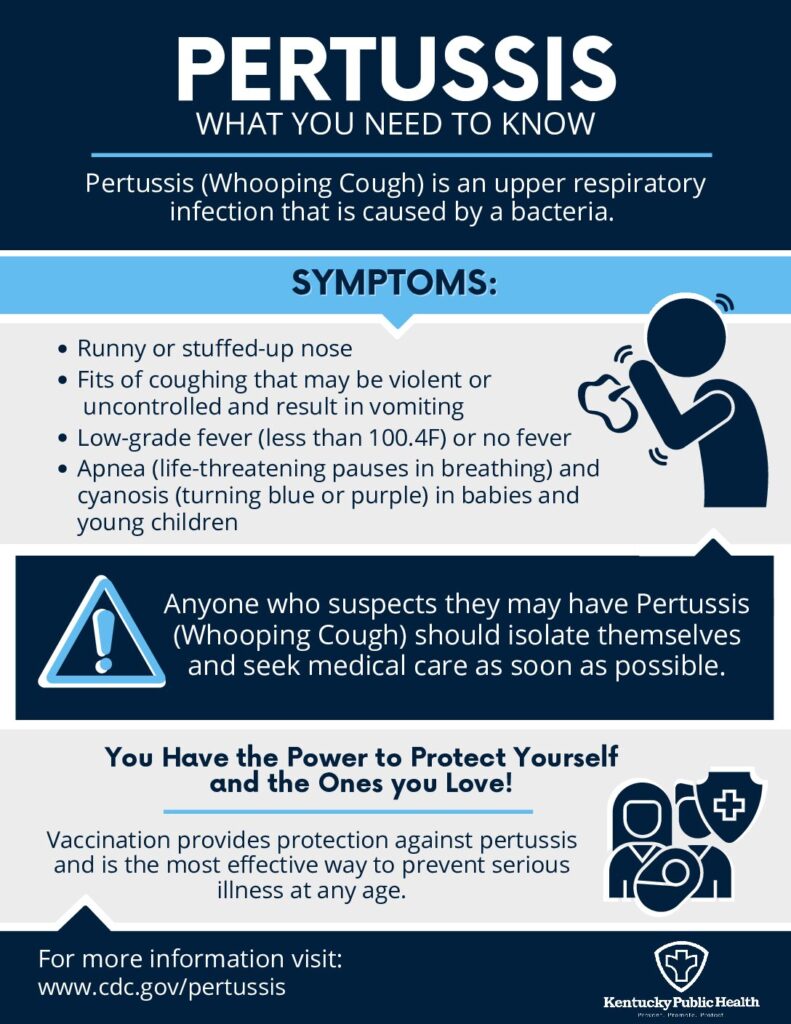
Pertussis, commonly known as whooping cough, is a highly contagious respiratory disease caused by the Bordetella pertussis bacteria. It is characterized by severe coughing fits, which can make breathing difficult and may result in a “whooping” sound when inhaling after a coughing fit.
Symptoms of Pertussis
Pertussis symptoms often develop in stages:
- Early symptoms (1-2 weeks):
- Mild cough
- Runny nose
- Low-grade fever
- Occasional pauses in breathing (apnea) in infants
- Later symptoms (2-10 weeks):
- Severe, rapid coughing fits
- High-pitched “whooping” sound
- Vomiting after coughing
- Exhaustion after fits
How Pertussis Spreads
Pertussis spreads easily through:
- Respiratory droplets from coughing or sneezing
- Close contact with an infected individual
It is especially dangerous for infants, young children, and those with weakened immune systems.
Preventing Pertussis
To protect yourself and your family:
- Vaccinate: The DTaP vaccine (for children) and Tdap booster (for teens and adults) protect against pertussis.
- Practice good hygiene:
- Cover your mouth and nose when coughing or sneezing.
- Wash hands frequently with soap and water.
- Avoid close contact with sick individuals.
- Stay home if you’re sick: Limit exposure to others if you have symptoms.
What to Do If You Suspect Pertussis
- Seek medical attention immediately if you or a loved one show signs of pertussis. Early treatment with antibiotics can help prevent the spread and reduce symptom severity.
- Notify your healthcare provider about possible exposure to pertussis, especially if you are pregnant, have young children, or work with vulnerable populations.

Measeles: Protect Your Child
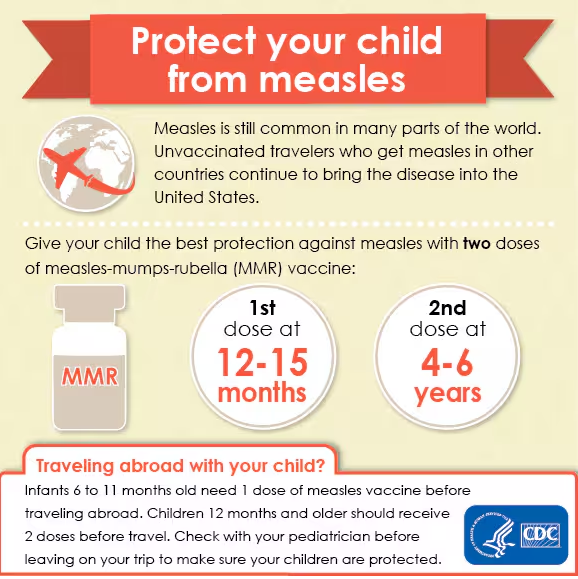
Measles is still common in many parts of the world. Unvaccinated travelers who get measles in other countries continue to bring the disease into the United States.
Give your child the best protection against measles with two doses of measles-mumps-rubella (MMR) vaccine: MMR
1st dost at 12-15 months
2nd dose at 4-6 years
Traveling abroad with your child?
Infants 6 to 11 months old need 1 dose of measles vaccine before traveling abroad. Children 12 months and older should receive 2 doses before travel. Check with your pediatrician before leaving on your trip to make sure your children are protected.
U.S. Department of Health and Human Services, Centers for Disease Control and Prevention
H5N1: Protect Yourself When Working With Farm Animals
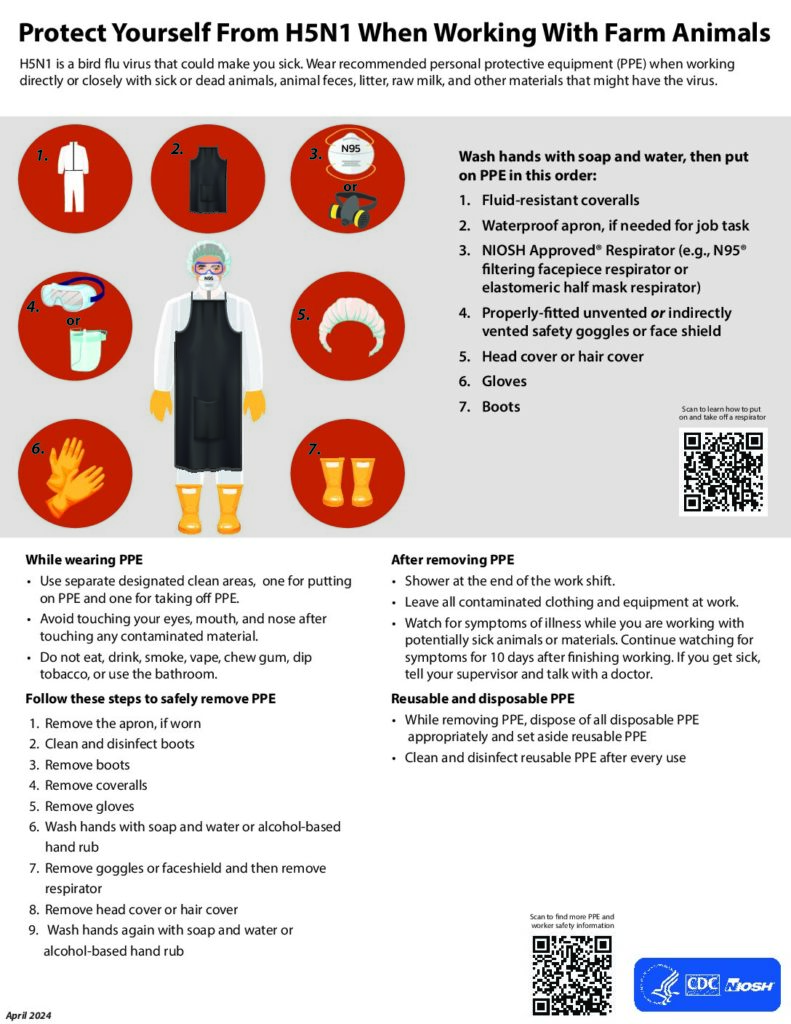
H5N1 bird flu is spreading among wild birds globally and has led to outbreaks in poultry and even U.S. dairy cows, with a recent case in a dairy worker. Though the risk to the public is currently low, the CDC is closely monitoring the situation. They’re collaborating with states to track individuals with animal contact. Using their flu surveillance systems, the CDC keeps a close eye on any H5N1 activity in people.
U.S. Department of Health and Human Services, Centers for Disease Control and Prevention
Prevention Resources
- Personal Hygiene: Keeping Hands Clean, Coughing and Sneezing, Nail Hygiene
- Protecting Your Early Care and Education Program from COVID-19 and Other Infections
- Supporting the Child Vaccination Decision Process—Better Kid Care | Penn State Extension
- Ventilation in Schools and Childcare Programs
- Use and Handling of Toothbrushes